
How to Retire in Cambodia: Visas, Cost of Living & Best Cities in 2026
How to Retire in Cambodia: Visas, Cost of Living & Best Cities in 2026
Meta Description: Everything you need to know about retiring in Cambodia — ER visa requirements, real monthly costs, the best cities for expats, healthcare advice, and a step-by-step relocation plan for 2026.
Cambodia is rapidly becoming one of Southeast Asia’s most attractive retirement destinations — and for good reason. With a cost of living that lets your pension stretch three to four times further, a straightforward retirement visa with no property purchase requirement, and a warm, welcoming expat community, more retirees are choosing Cambodia over traditional options like Thailand or Portugal.
In this guide, I’ll walk you through everything you need: the ER retirement visa explained, a real cost-of-living breakdown, the four best cities to retire in, honest advice about healthcare, and a step-by-step plan to make the move.
Why Retire in Cambodia?
Cambodia offers three advantages that set it apart from other retirement destinations in the region.
1. The Cost of Living
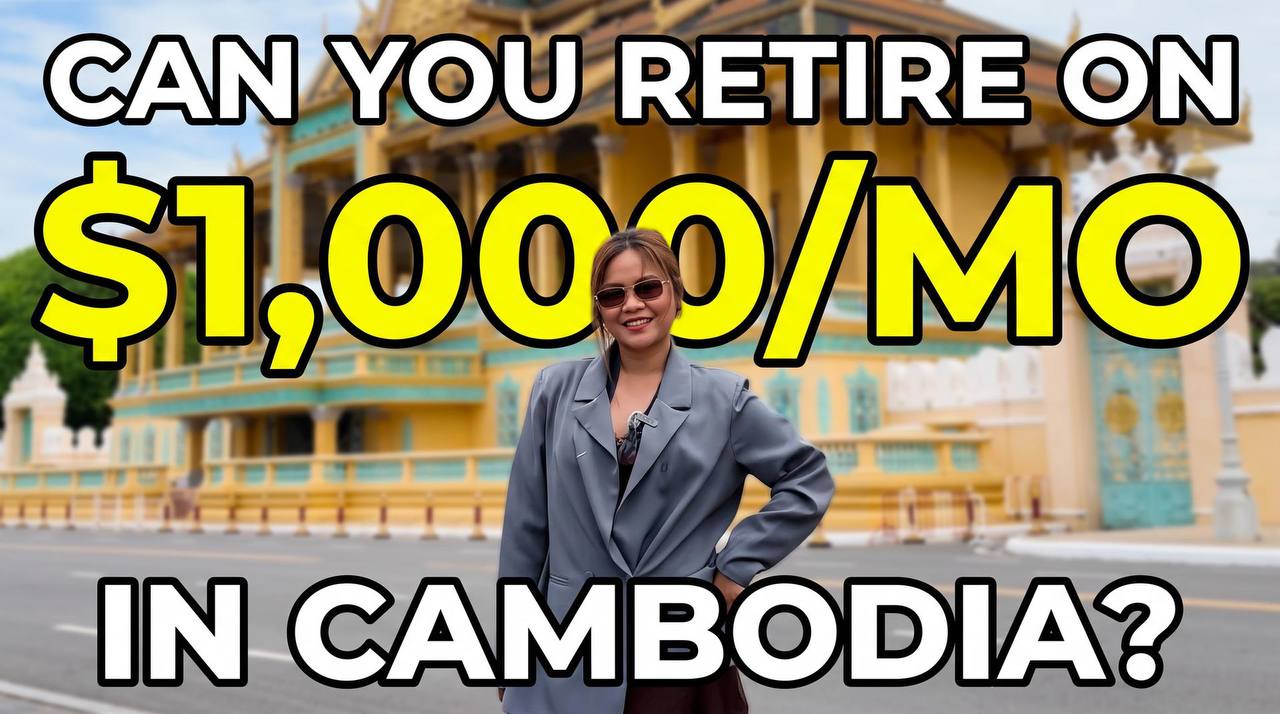
You can live very comfortably here on $1,000 to $1,500 per month. That includes a modern, fully furnished apartment, eating out for most meals, transportation, and even a cleaner. In many Western countries, that same budget would barely cover rent.
2. The US Dollar Economy
Cambodia runs on US dollars. You withdraw dollars from ATMs, pay rent in dollars, and see prices in dollars everywhere. There is no currency risk, no need to constantly calculate exchange rates, and no surprises when the local currency fluctuates.
3. The Retirement Visa Is Actually Simple
Unlike Thailand, which requires a ฿800,000 (about $22,000) bank deposit, or Malaysia’s MM2H program with its income thresholds, Cambodia’s ER retirement visa is refreshingly straightforward — no property purchase, no fixed deposit, no minimum income.
The Cambodia ER Retirement Visa: Requirements & Process
The ER visa is Cambodia’s dedicated retirement visa. Here is exactly what you need to qualify and how to get it.
Eligibility
- Age: 55 years or older (no upper age limit)
- Passport: Valid for at least six months beyond your application date
- Background check: A clean criminal record certificate from your home country
- Medical certificate: A basic health check from any Cambodian clinic or hospital
- Financial means: No fixed threshold is published, but most retirees maintain a local bank account with a few thousand dollars to demonstrate self-sufficiency
The Application Process
Cambodia’s visa process works differently from what you might expect. You do not apply directly to immigration. Instead, you work through a local visa agent or travel agency — they handle the paperwork, the translation, and the liaison with the immigration department.
The typical process:
- Enter Cambodia on a tourist or ordinary visa (available on arrival for most nationalities)
- Find a visa agent — any reputable agency in Phnom Penh or Siem Reap can process the ER visa
- Submit your documents — passport, background check, medical certificate, passport photos
- Pay the fee — approximately $300 to $350 per year, all inclusive
- Receive your visa — processing typically takes one to two weeks
The ER visa is renewable annually with the same process. There is no limit on renewals.
What the ER Visa Does NOT Require
- ❌ No property purchase
- ❌ No fixed bank deposit
- ❌ No minimum monthly income
- ❌ No health insurance mandate (though highly recommended)
This makes it one of the most accessible retirement visas in Southeast Asia.
Cost of Living: Real Numbers for a Comfortable Retirement
Let me break down exactly what a comfortable retirement costs in Cambodia — not a backpacker budget, but a proper lifestyle with a modern apartment, good food, and all your essentials covered.
| Expense | Monthly Cost (USD) |
|---|---|
| Rent — 1-bedroom modern condo, furnished, pool & gym | $400–$600 |
| Utilities — electricity, water, fiber internet | $80–$120 |
| Food — mix of eating out & cooking at home | $200–$300 |
| Transportation — tuk-tuks & occasional Grab rides | $50–$100 |
| Health insurance — international plan | $150–$300 |
| Visa — ER retirement visa, annual cost ÷ 12 | ~$30 |
| Entertainment & miscellaneous | $100–$200 |
| TOTAL | $1,010–$1,650 |
At the lower end — around $1,000 — you are living comfortably but modestly. At $1,500 to $1,650, you have a spacious apartment in a prime location, eat out whenever you want, travel within the country, and still save.
Compare this to retiring in Florida, the Costa del Sol, or Sydney, and the difference is dramatic. Your pension simply buys more life here.
Best Cities to Retire in Cambodia
Cambodia offers four distinct retirement lifestyles. Which one fits you depends on what you value most — convenience, culture, peace, or the coast.
Phnom Penh — The Capital & Urban Hub
Phnom Penh is the obvious choice if you want city life with all the modern conveniences. It has the best healthcare facilities in the country, the widest selection of international restaurants and supermarkets, and the largest expat community.
Best for: Retirees who want easy access to hospitals, dining, shopping, and an active social scene.
Rent: $400–$700 for a modern one-bedroom condo in areas like BKK1, Tonle Bassac, or the Riverside.
Vibe: Busy, international, full of cafés and rooftop bars. The traffic can be intense, but neighborhoods like the Riverside offer a more walkable pace.
Siem Reap — Cultural Heart & Slower Pace
Home to Angkor Wat, Siem Reap is greener, quieter, and noticeably cheaper than Phnom Penh. It has a well-established expat community, excellent cafés, and a walkable town center.
Best for: Retirees who want culture, a slower rhythm, and lower costs — without sacrificing community.
Rent: $250–$500 for a comfortable apartment or a small house with a garden.
Vibe: Relaxed, artistic, and community-focused. Mornings at the market, afternoons at a café, evenings with friends. About 20–30% cheaper than the capital.
Kampot — Riverside Peace
Kampot is a small riverside town in southern Cambodia. It has become a magnet for expats seeking true peace — low costs, fresh air, and a tight-knit community. The Bokor Mountain backdrop and the wide riverfront make it one of the most scenic places in the country.
Best for: Retirees who want solitude, nature, and the lowest possible cost of living without moving to a village.
Rent: $200–$400 for a riverside bungalow or apartment.
Vibe: Sleepy, romantic, slow. You come to Kampot to read, write, garden, and disconnect. Phnom Penh and Sihanoukville are reachable for weekend trips.
Sihanoukville — Beaches & Investment
Sihanoukville has transformed dramatically in recent years. Chinese investment reshaped the city, and it remains more developed (and more chaotic) than the other options. But the beaches are real, and the new Phnom Penh–Sihanoukville Expressway now connects the two cities in just two and a half hours — making weekend getaways or part-time coastal living genuinely practical.
Best for: Retirees who want beach access and don’t mind a busier, more commercially active environment.
Rent: $300–$600 depending on proximity to the beach and property type.
Vibe: Coastal, energetic, and still evolving. The islands — Koh Rong and Koh Rong Samloem — are a short boat ride away.
Healthcare in Cambodia: The Honest Truth
This is the one question every retiree asks — and it deserves an honest answer.
Yes, Cambodia has good private healthcare — in Phnom Penh and Siem Reap. Facilities like Bangkok Hospital Phnom Penh, Royal Phnom Penh Hospital, and Sunrise Japan Hospital offer modern equipment, English-speaking doctors, and international-standard care for most routine and intermediate needs.
But. For major surgery, complex diagnostics, or any treatment requiring advanced specialist care, most expats travel to Bangkok. It is a one-hour flight from Phnom Penh, and Thailand offers genuinely world-class medical care at prices still far below the United States.
My Recommendation
-
Get international health insurance that explicitly covers treatment in Thailand as well as Cambodia. Plans from providers like Cigna Global, AXA, or Allianz typically run $150–$300 per month depending on age and coverage level.
-
If you retire in Siem Reap or Kampot, budget for occasional trips to Phnom Penh or Bangkok for specialist consultations. This is not a daily concern — but plan for it.
-
Build a medical emergency fund of $5,000–$10,000. This covers flights, hospital deposits, and any out-of-pocket costs your insurance does not cover immediately.
For routine care — GP visits, dental work, prescriptions — Cambodia is excellent and affordable. A doctor’s consultation typically costs $20–$50, and most medications are available over the counter at a fraction of Western prices.
Your 5-Step Relocation Plan
Ready to make the move? Here is a practical, step-by-step plan — based on what I have seen work for dozens of expats I have helped.
Step 1: Visit First
Do not commit to a long-term lease or purchase without visiting. Spend at least two weeks in Cambodia. Visit Phnom Penh and at least one other city — Siem Reap or Kampot. Walk the neighborhoods. Eat at local restaurants. Talk to expats who have already made the move.
A retirement destination is not just numbers on a spreadsheet — it is a place that either feels like home or does not.
Step 2: Rent Before You Buy
This is the single most important piece of advice I give to new arrivals. Rent for at least six months to a year before you even consider buying property.
Renting lets you:
- Learn which neighborhoods you actually enjoy living in
- Understand the real costs of your lifestyle before committing to a purchase
- Build relationships with local agents and expats who can help you make an informed decision later
Yes, I help clients buy property. And I still tell every one of them: rent first.
Step 3: Apply for Your ER Visa
Once you have arrived and settled into your rental, find a local visa agent to process your ER retirement visa. The agent will guide you through the paperwork, help arrange the medical check, and handle the immigration filing. The entire process takes one to two weeks and costs around $300–$350.
Step 4: Open a Local Bank Account
Cambodia’s two main banks — ABA Bank and ACLEDA Bank — both make it straightforward for expats to open accounts. You will need your passport, a valid visa, and a local address. Both banks offer mobile apps in English, Visa debit cards, and online transfers.
Having a local account makes rent payments, utility bills, and daily spending much simpler — and it helps demonstrate financial stability when you renew your visa.
Step 5: Build Your Life
Join expat Facebook groups. Find your local market. Learn a few Khmer phrases — “sous-dey” (hello), “aw-koon” (thank you), “som-toh” (sorry/excuse me). The Khmer people are warm and patient with foreigners who make even a small effort.
Cambodia rewards those who arrive with an open mind. It is not a polished, frictionless destination like Singapore. It is developing, sometimes chaotic, and endlessly interesting. If that appeals to you — you may have just found home.
Is Cambodia Right for You?
Cambodia is not for everyone. The heat is intense from March to May. The traffic in Phnom Penh is genuinely chaotic. The infrastructure is still developing — power outages happen, sidewalks are inconsistent, and bureaucracy can test your patience.
But if you want a place where your retirement savings give you real freedom — a spacious apartment, good food, warm weather, friendly people, and a lifestyle that feels expansive rather than constrained — Cambodia deserves a serious look.
Have questions about retiring in Cambodia? I’m Charlotte — a property consultant based in Phnom Penh. I help expats find the right apartment in the right neighborhood, and I am here to help you navigate the process. Reach out anytime.